-
-
-
NH 31, Bhaganbigha,, P.O.- Sohsarai, Bihar Sharif, Bihar 803118
Rohit Kumar
November 26, 2026
10 Essential Clinical Skills for Nursing Students in Bihar
Discover 10 essential clinical skills every nursing student must learn for a successful healthcare career. Explore practical nursing education at GINP, Nalanda, Bihar.
A great nurse is not defined by knowledge alone, but by the skill to heal, the courage to care, and the compassion to make a difference.
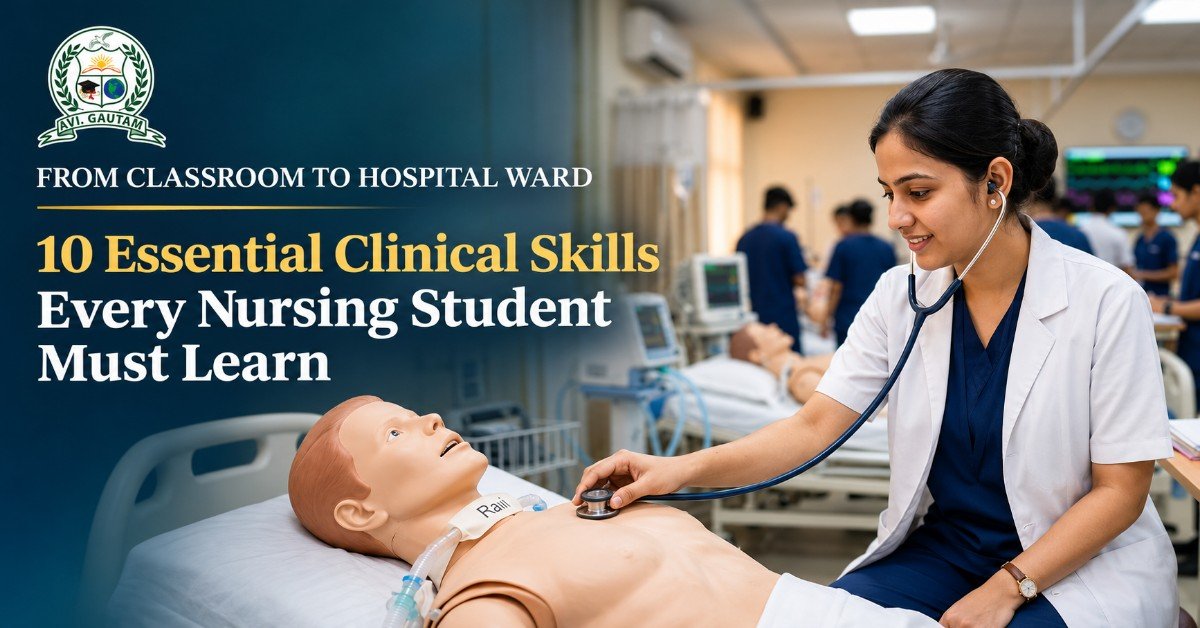
From Classroom to Hospital Ward: 10 Essential Clinical Skills Every Nursing Student Must Learn
Nursing is more than a professional qualification. It is a career that combines scientific knowledge, practical expertise, critical thinking, compassion and responsibility. While classroom education helps students understand the fundamentals of healthcare, clinical training enables them to apply that knowledge in real-life situations.
For students planning to pursue nursing education in Bihar, developing practical skills is an important step towards becoming a competent healthcare professional. Understanding patient needs, maintaining safety standards and communicating effectively are just as important as performing clinical procedures.
At Gautam Institute of Nursing & Paramedics (GINP), located in Bihar Sharif, Nalanda, nursing education brings together academic learning, laboratory practice and clinical exposure to support students in their professional journey.
Let us explore ten essential clinical skills that every aspiring nursing professional should develop.
Why Are Clinical Skills Important in Nursing Education?
Clinical skills are the practical abilities that help nursing professionals provide safe, effective and compassionate patient care within their professional responsibilities.
The Indian Nursing Council's competency-based approach to B.Sc. Nursing education highlights the importance of professional knowledge, practical abilities, communication, teamwork and patient safety.
Practical nursing education helps students:
Connect theoretical concepts with real healthcare situations.
Understand patient conditions and healthcare requirements.
Develop confidence through supervised clinical practice.
Improve decision-making and problem-solving abilities.
Maintain professional ethics and patient safety.
Prepare for responsibilities in hospitals and community healthcare settings.
A successful nursing career begins not only with passing examinations but also with developing the ability to apply knowledge responsibly.
10 Essential Clinical Skills Every Nursing Student Should Develop
1. Patient Assessment and Vital Signs Monitoring
Patient assessment is one of the fundamental responsibilities of nursing professionals. It involves observing a patient's physical condition, identifying healthcare needs and reporting relevant findings.
Nursing students learn about monitoring:
Body temperature.
Blood pressure.
Pulse rate.
Respiratory rate.
Oxygen saturation.
General physical condition.
Understanding these observations helps students recognise changes in a patient's health and communicate important information to the healthcare team.
Laboratory demonstrations and supervised clinical exposure help students build accuracy, observation skills and professional confidence.
2. Infection Prevention and Patient Safety
Patient safety is a central component of modern nursing education. Healthcare professionals must understand how infections spread and how appropriate preventive practices help protect patients, staff and visitors.
Important areas of learning include hand hygiene, personal protective equipment, safe waste management, environmental cleanliness and infection prevention protocols.
The World Health Organization emphasises infection prevention and safety education as essential components of healthcare training.
Developing these habits during nursing education encourages students to become responsible professionals who understand the importance of maintaining a safe healthcare environment.
3. Effective Patient Communication
Communication is one of the most valuable skills in the nursing profession. Patients may experience anxiety, discomfort or uncertainty during treatment, making clear and compassionate communication particularly important.
Nursing students should learn to listen actively, communicate respectfully, explain information in understandable language and recognise patients' emotional concerns.
Why Does Communication Matter in Nursing?
Effective communication helps build trust, reduces misunderstandings and supports coordination between patients, families and healthcare professionals.
In regions such as Bihar, where patients may communicate in different languages and local dialects, sensitivity to cultural and linguistic differences can also make healthcare interactions more meaningful.
4. Medication Safety and Management
Medication-related responsibilities require attention, accuracy and professional accountability.
During nursing education, students develop knowledge of pharmacology, medication safety principles, prescribed treatment protocols, documentation and the importance of identifying potential medication-related concerns.
Students must understand that medication administration requires appropriate authorisation, professional competence and adherence to institutional protocols.
Supervised demonstrations allow nursing students to develop these responsibilities gradually while prioritising patient safety.
This combination of theoretical understanding and structured practical learning helps prepare students for future professional responsibilities.
5. Emergency Response and Basic Life Support Awareness
Healthcare environments can present unexpected situations that require calm thinking and timely action.
Nursing students should develop awareness of emergency response systems, basic life support, patient deterioration, first aid principles and appropriate escalation procedures.
Emergency preparedness also involves learning how to communicate effectively, request assistance and coordinate with other healthcare professionals.
Structured training and simulation exercises can help students become more familiar with stressful situations before encountering them in clinical settings.
Emergency procedures must always be performed according to appropriate training, supervision and professional protocols.
6. Wound Care and Patient Comfort
Wound care is an important area of practical nursing education. Students learn the principles of wound observation, dressing techniques, infection prevention and documentation through academic instruction and supervised practice.
However, nursing care extends beyond clinical procedures.
Maintaining patient comfort, respecting privacy, recognising discomfort and supporting emotional well-being are equally important aspects of professional care.
Learning to treat patients with dignity helps nursing students understand that healthcare is not simply about managing a medical condition. It is also about supporting the individual throughout their recovery journey.
7. Clinical Documentation and Digital Healthcare Skills
Accurate documentation supports continuity of care, professional communication and patient safety.
Nursing students should develop an understanding of patient records, observation charts, nursing notes, care plans and confidential information management.
The Growing Importance of Digital Healthcare
As healthcare organisations adopt digital systems, familiarity with electronic health records, hospital management software and digital documentation is becoming increasingly valuable.
Students who combine clinical knowledge with basic digital literacy can be better prepared for technology-enabled healthcare environments.
Confidentiality, accuracy and responsible handling of patient information must remain priorities, regardless of whether records are maintained digitally or on paper.
8. Teamwork and Interprofessional Collaboration
Healthcare is a collaborative profession. Nurses work alongside doctors, pharmacists, laboratory professionals, technicians and other healthcare workers.
Effective teamwork requires mutual respect, clear communication, accountability and an understanding of individual professional responsibilities.
Nursing students develop these abilities through group assignments, classroom discussions, practical demonstrations and supervised clinical learning.
Strong collaboration supports coordinated care and creates a more organised healthcare environment.
It also helps future nursing professionals recognise the importance of asking for guidance, sharing relevant observations and respecting the expertise of other members of the healthcare team.
9. Maternal, Child and Community Healthcare Skills
Nursing professionals contribute significantly to healthcare beyond hospitals.
Maternal and child health, community awareness, preventive healthcare, nutrition education and patient support are important areas of nursing education.
For communities across Nalanda and other districts of Bihar, healthcare awareness and access to trained professionals are particularly meaningful.
Nursing students who understand community healthcare can develop a broader perspective on public health and the social factors influencing patient well-being.
These competencies are relevant to several nursing programmes, depending on their curriculum and level of professional training.
10. Critical Thinking and Professional Decision-Making
A competent nursing professional must be able to observe carefully, understand information and respond responsibly.
Critical thinking helps students identify concerns, understand priorities, recognise their professional limitations and determine when assistance from qualified healthcare professionals is required.
Clinical education encourages students to connect classroom knowledge with practical observations rather than relying only on memorised information.
Over time, supervised experience, reflection and constructive feedback help students develop more confident and responsible approaches to patient care.
Professional judgement is built through continuous learning, experience and commitment to ethical healthcare practices.
How Practical Nursing Education Connects Theory with Real Healthcare
Practical training is the bridge between understanding healthcare concepts and applying them professionally.
An effective nursing education experience generally includes several stages:
| Learning Stage | Purpose |
|---|---|
| Classroom education | Understanding scientific and nursing concepts |
| Laboratory demonstrations | Learning practical techniques in a structured environment |
| Supervised practice | Developing accuracy and confidence |
| Clinical exposure | Understanding real healthcare environments |
| Assessment and feedback | Identifying strengths and improving competencies |
Together, these learning experiences help students develop both academic understanding and practical readiness.
Practical Nursing Education at Gautam Institute of Nursing & Paramedics, Bihar
Established in 2008, Gautam Institute of Nursing & Paramedics is situated at Bhaganbigha, near Sohsarai, Bihar Sharif, in Nalanda district.
The institute operates under Gautam Group of Institutions and focuses on academic development, practical learning and professional healthcare education.
Nursing Programmes Offered at GINP
Students can explore the following programmes:
Auxiliary Nurse Midwifery (ANM).
General Nursing and Midwifery (GNM).
Basic B.Sc. Nursing.
Post Basic B.Sc. Nursing.
M.Sc. Nursing.
Supporting Professional Development
GINP provides nursing laboratories, academic resources, faculty guidance, clinical exposure and campus facilities to support students throughout their educational journey.
For aspiring nursing students from Nalanda, Patna, Gaya, Nawada, Sheikhpura and neighbouring regions, the institute offers an opportunity to explore professional nursing education within Bihar.
Students should confirm current programme eligibility, recognition, clinical arrangements and admission requirements directly with the institute.
Career Opportunities After Developing Clinical Nursing Skills
Depending on their qualifications, professional registration, experience and recruitment requirements, nursing graduates may explore opportunities in:
Government and private hospitals.
Community health centres.
Nursing homes.
Maternal and child healthcare services.
Public health programmes.
Specialised healthcare departments.
Nursing education and research after relevant higher qualifications.
Clinical competence, professional communication and continuous learning can play an important role in long-term career development.
Frequently Asked Questions (FAQs)
1. What are the most important clinical skills in nursing?
Patient assessment, infection prevention, communication, medication safety, emergency preparedness, documentation, teamwork and critical thinking are important competencies for nursing students.
2. Why is practical training important for B.Sc. Nursing and GNM students?
Practical training helps students connect theoretical knowledge with supervised healthcare experiences while developing professional confidence and safety awareness.
3. Can nursing students learn clinical skills in laboratories?
Yes. Nursing laboratories provide structured environments where students can observe demonstrations and practise relevant techniques under appropriate supervision before applying their learning in clinical settings.
4. Which nursing college in Nalanda offers practical nursing education?
Gautam Institute of Nursing & Paramedics in Bihar Sharif, Nalanda, offers nursing programmes supported by laboratory learning, faculty guidance and clinical exposure.
5. Where can I get information about nursing admission at GINP?
Students can visit the official GINP website at https://gautaminp.ac.in/ or contact the institute for current admission details, programme eligibility and course information.
Conclusion: Building the Next Generation of Healthcare Professionals
The future of nursing depends on professionals who combine scientific knowledge with practical competence, empathy, discipline and ethical responsibility.
Developing clinical skills during nursing education helps students prepare for the challenges of healthcare while understanding the importance of patient dignity and safety.
At Gautam Institute of Nursing & Paramedics, Bihar Sharif, the focus on academic learning, practical education and professional development supports aspiring students as they begin their journey towards a meaningful healthcare career.
Your nursing journey begins in the classroom, but your skills can make a difference in someone's life.
Take the First Step Towards Your Nursing Career
Gautam Institute of Nursing & Paramedics (GINP)
Address: NH 31, Bhaganbigha, P.O. Sohsarai, Bihar Sharif, Nalanda, Bihar – 803118
Admission Enquiry: +91 9262994129
Email: ginp.bihar@gmail.com
Official Website: https://gautaminp.ac.in/